
Leak Detection & Slab Leak Repair
Slab leaks are one of the most damaging — and most misdiagnosed — plumbing problems in Central Texas. Alberto Plumbing uses acoustic and thermal detection to locate leaks under concrete foundations without guesswork, then provides repair options that minimize disruption and protect your home's structure.
- 4.9★ Google · 186 reviews
- BBB A+ Accredited
- Licensed TX Master M-39647
- BuildZoom 95 Contractor score
- Family-Owned Local & independent
- 16+ yrs Experience
Why slab leaks are a Central Texas reality
The Pflugerville and North Austin area presents near-ideal conditions for slab leaks. Most homes in the region — whether built in the 1970s or 2020s — sit on concrete slab foundations. Plumbing supply lines run either under the slab, through the slab, or embedded within it. When those lines develop a leak, the water escapes under pressure into the soil, into the slab itself, or up through the concrete into the home.
Several local factors accelerate pipe deterioration:
- Very hard water. Central Texas water with 400+ mg/L mineral content is corrosive to older copper pipes over time — not from hardness itself but from the interaction of dissolved minerals and pipe walls under sustained pressure. Pitting corrosion is a known mechanism in copper supply lines serving hard-water areas.
- Expansive clay soils. The black clay ("black gumbo") soil common throughout the region shrinks in drought and expands dramatically when wet. This seasonal movement shifts the slab and stresses embedded pipes — a well-established cause of slab leaks in Texas homes.
- Temperature cycling. Freeze-thaw cycles — especially pronounced events like the February 2021 storm — cause sudden pipe contraction and can crack or separate older joints under the slab. Subsequent drought conditions shift the soil further, stressing the same lines.
Understanding these causes matters for repair recommendations. A single spot repair on a 40-year-old copper line in a high-movement area may not be the most cost-effective long-term solution. Alberto Plumbing explains the full picture before recommending a course of action.
Leak detection and repair services
- Non-invasive acoustic leak detection — electronic equipment listens for the pressure-leak signature through concrete and soil before any cutting
- Thermal imaging — identifies hot-water line leaks by detecting temperature differentials in flooring above the slab
- Water meter isolation testing — confirms a leak exists and narrows down whether it's a supply line, a slab line, or a lateral before detection equipment is deployed
- Slab leak repair — targeted jackhammer access, direct pipe splice or section replacement, concrete patching
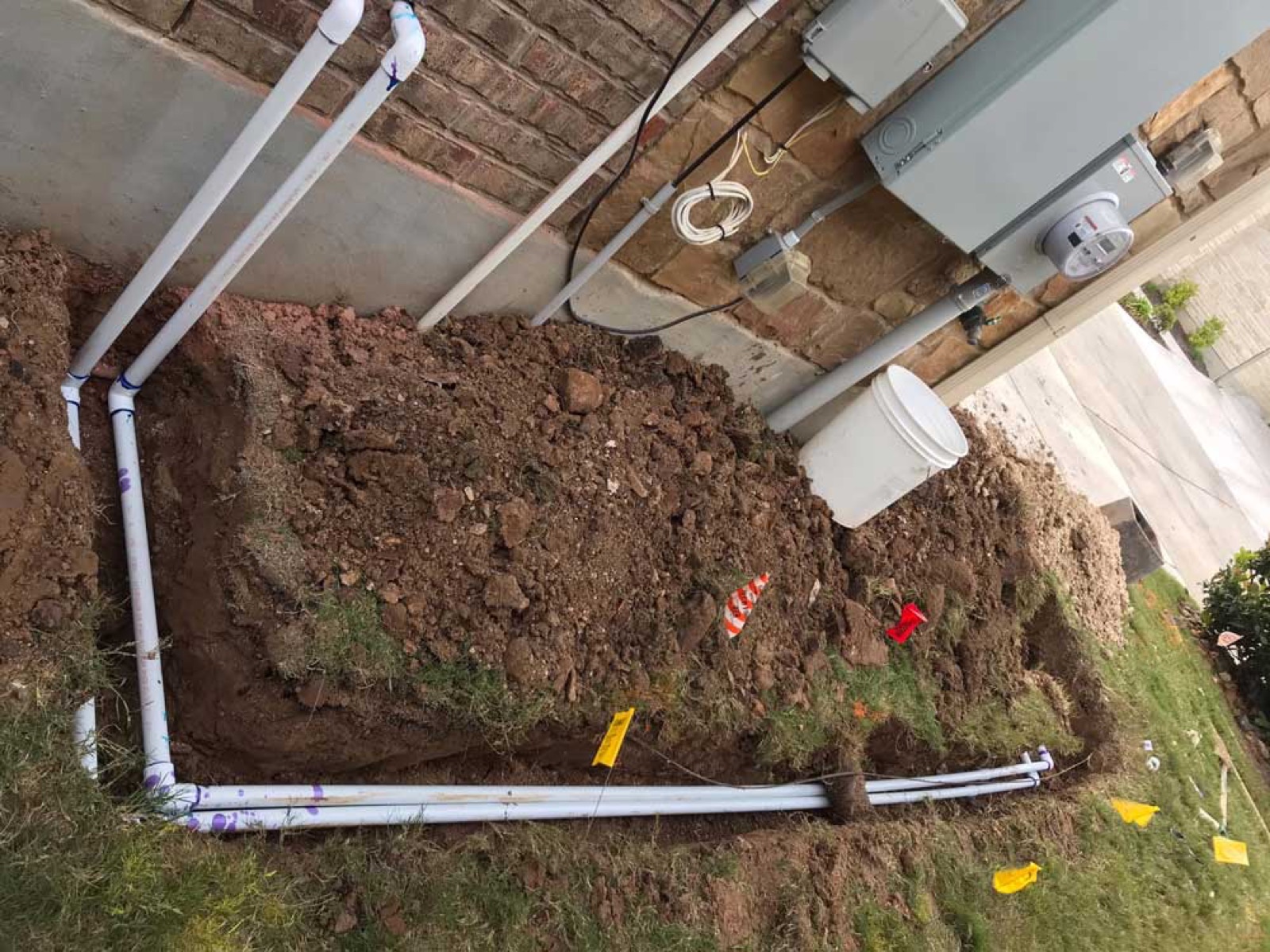
- Pipe rerouting — running a new line through walls or attic to bypass a deteriorated slab line section entirely
- Epoxy pipe lining — where applicable, lining the interior of the existing pipe to seal the leak without breaking concrete
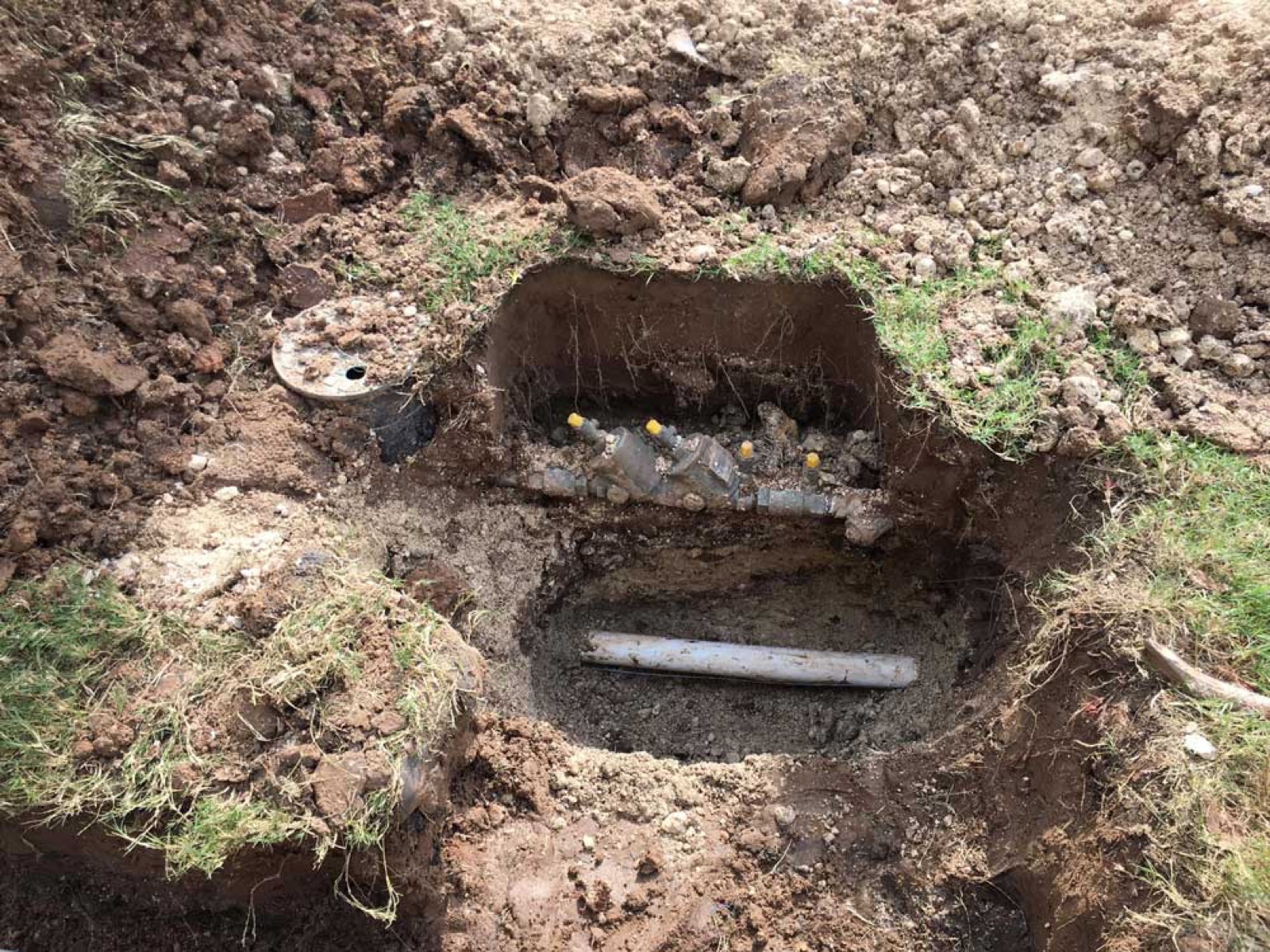
- Yard and lateral line leak repair — water supply line from meter to home running underground through the yard
- Water leak detection for insurance documentation — written diagnostic reports accepted by Texas homeowner's insurance claims
How Alberto Plumbing locates slab leaks
The worst slab leak repairs happen when a plumber doesn't know exactly where the leak is and opens up large sections of floor "to find it." Alberto Plumbing uses a different approach:
- Meter test. We isolate the main shutoff and watch the meter. If it's still moving, you have an active supply leak. This takes minutes and establishes the baseline.
- Zone isolation. We identify whether the leak is on the hot side or cold side of the system, which narrows down which line to investigate.
- Acoustic detection. Electronic listening equipment is placed against the slab surface at multiple points. Water escaping under pressure produces a distinctive sound signature that the equipment amplifies and pinpoints. This process localizes the leak to within a few inches.
- Thermal imaging (when applicable). For hot-water line leaks, a thermal camera shows the temperature anomaly in the floor — a fast visual confirmation of the detection equipment's reading.
- Marked and confirmed before we cut. We mark the slab before any jackhammer or saw is used, and confirm the location once more. The access cut is as small as practically possible.
Slab leak repair options
After locating the leak, Alberto Plumbing presents the available repair options and the honest trade-offs of each:
Direct spot repair. Jackhammer access at the leak location, repair or splice the pipe, restore the concrete. This is the fastest and least expensive option when the rest of the pipe system is in good condition and the leak is an isolated event.
Pipe rerouting. Rather than cutting the slab at all, the failing slab line is abandoned and a new supply line is routed through walls, the attic, or the exterior of the home to the same endpoint. More work upfront, but eliminates the slab line entirely — a strong choice for older copper systems prone to future leaks.
Epoxy lining. Where the pipe condition allows, epoxy resin is introduced into the existing pipe to coat and seal the interior. No concrete cutting required. Best for distributed small leaks or pitting corrosion in a long run, rather than a pinhole leak at a joint.
Jose A. Vital (Master Plumber M-39647) recommends the method that best matches your specific situation — pipe age, condition, leak type, soil conditions, and home construction — not the option with the highest ticket price.
When to call: don't wait on a potential slab leak
A small slab leak running undetected for weeks causes exponentially more damage than one caught early. The water migrates through the slab, saturates the soil beneath, promotes mold growth in flooring and walls, and — in severe or prolonged cases — compromises the foundation itself. An early call to Alberto Plumbing at (512) 429-6933 typically keeps the repair in the $1,500–$3,000 range. A leak that ran for months before diagnosis is a different project.
If you notice any of the warning signs above — unexplained water bill spike, sounds of running water when nothing is on, warm spots on your floor — call us for a same-day detection appointment. We serve Pflugerville, Round Rock, Hutto, and Austin.
Related services
- Water softeners and filtration — reducing mineral content slows pipe corrosion and extends the life of your plumbing system
- Emergency plumbing — active flooding from a burst supply line requires immediate response
- Water pressure services — pressure that's too high accelerates pipe wear and increases slab leak risk; Alberto Plumbing installs pressure reducing valves
Leak Detection & Repair by city
Trusted for leak detection & repair
Leak Detection & Repair FAQs
The most common signs: a sudden unexplained spike in your water bill, the sound of running water when all fixtures are off, warm or hot spots on your floor (a hot-water supply line leak), damp or soft spots in flooring or carpet over a slab, cracks appearing in floor tile or drywall, and reduced water pressure with no other obvious cause. Any one of these is worth a call — slab leaks don't resolve on their own and the longer they run, the more foundation and flooring damage accumulates.
Costs vary significantly depending on access requirements and repair method. Spot repair with jackhammering and repipe of the damaged section typically runs $1,500–$4,000. Rerouting the line through walls (epoxy lining or tunneling) can range from $2,000 to $6,000+ for complex situations. The single biggest driver of cost is how long the leak has been running — early detection keeps repair scope manageable. Alberto Plumbing provides a specific written estimate after locating the leak, with no obligation to proceed.
Texas homeowner's policies typically cover the sudden and accidental damage caused by a slab leak (flooring, drywall, mold remediation) but often do not cover the actual pipe repair itself. Coverage varies substantially by policy. A licensed Master Plumber's written diagnosis and repair estimate is usually required for the insurance claim. Alberto Plumbing provides documentation that insurers accept.
Alberto Plumbing uses electronic acoustic detection and thermal imaging to locate leaks under slabs before any concrete is cut. Acoustic sensors pick up the sound signature of water escaping under pressure; thermal cameras show temperature anomalies from hot-water line leaks. This non-invasive process pinpoints the leak location within a few inches, so the access cut is as small as possible — rather than opening large sections of floor on a guess.
Sometimes. Trenchless epoxy lining can rehabilitate deteriorated supply lines running under or through the slab without cutting concrete — the epoxy coats the interior of the existing pipe and seals the leak. This works when the pipe is otherwise in good condition and the leak is not at a fitting or joint. For many slab leak situations, a targeted access cut (typically 12"–24" of concrete) combined with pipe rerouting or direct splice is still the most practical and cost-effective solution. Alberto Plumbing will explain which option applies to your specific leak.
A yard leak or lateral line leak occurs in the supply line between the city meter and your home — this line runs underground through your yard before entering the foundation. Signs: a water bill spike with no indoor leak found, wet spots or unusually green/lush grass over the line path, or the water meter spinning when all indoor valves are closed. These are separate from slab leaks but diagnosed with the same detection equipment.
Save on your next service call
More plumbing services
Need leak detection & repair? Let’s get it fixed.
Jose A. Vital, Owner & Master Plumber, and team — serving Pflugerville & Central Texas with honest, fast plumbing for 16+ years.
- 4.9★ Google · 186 reviews
- BBB A+ Accredited
- Licensed TX Master M-39647
- BuildZoom 95 Contractor score
- Family-Owned Local & independent
- 16+ yrs Experience