
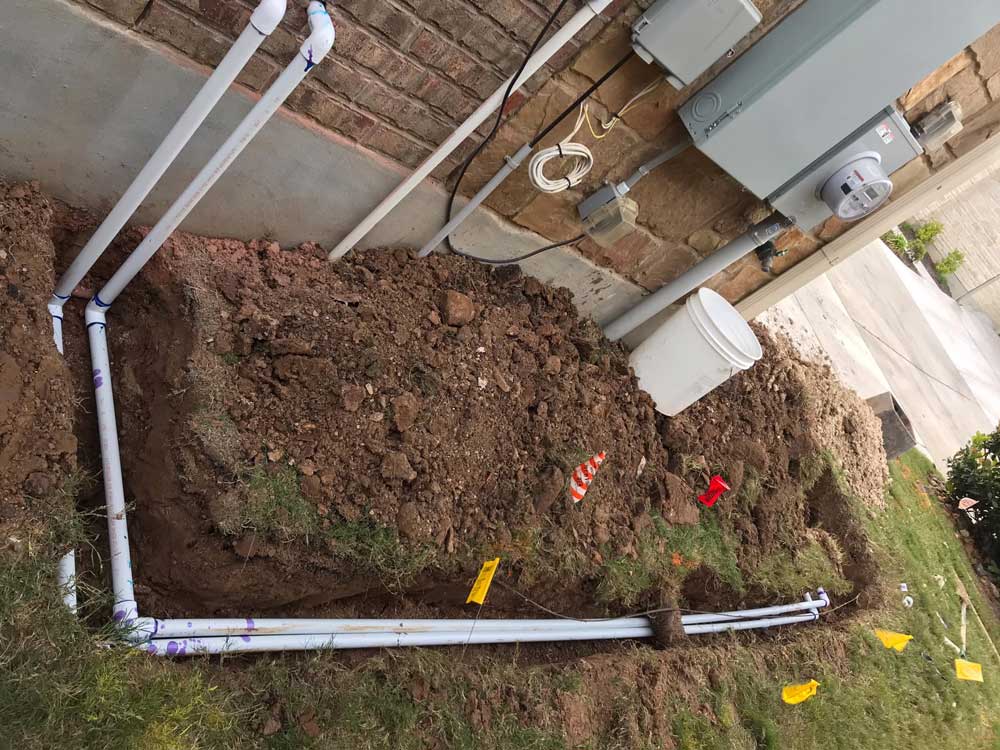
Gas Line Repair & Installation
Alberto Plumbing handles gas piping repair, gas leak repair and detection, gas pressure testing, and new gas line installation across Pflugerville, Round Rock, Hutto, and Austin. All gas work is performed by Jose A. Vital, Texas licensed Master Plumber (M-39647) — permitted, inspected, and done to code.
- 4.9★ Google · 186 reviews
- BBB A+ Accredited
- Licensed TX Master M-39647
- BuildZoom 95 Contractor score
- Family-Owned Local & independent
- 16+ yrs Experience
Gas piping repair and gas leak repair
Gas piping problems range from a small leak at a fitting to a corroded section of pipe that needs full replacement. Alberto Plumbing diagnoses and repairs all types of residential gas piping issues on both natural gas and propane systems.
Common gas piping repairs include:
- Leaking gas fittings, unions, or threaded connections
- Corroded or pitted black iron pipe sections — common in older Central Texas homes
- Damaged or improperly installed CSST (corrugated stainless steel tubing)
- Flexible gas connector replacement — the braided connectors at stoves, dryers, and water heaters should be replaced every 5–10 years
- Gas shutoff valve replacement — including the main shutoff and appliance-level valves
- Gas line repair after construction damage — a contractor accidentally cuts or nicks a line
- Leak repair at the gas meter connection or regulator
If you suspect a gas leak — a sulfur or rotten-egg smell, hissing near gas appliances or lines, or unexpectedly high gas bills — call Alberto Plumbing at (512) 429-6933 for same-day response. If the smell is strong or you feel unsafe, leave and call 911 first.
What to do if you smell gas
A strong gas odor is an emergency. The steps below apply whether you smell gas inside or outside your home:
- Leave immediately. Do not stay inside to look for the source. Get everyone — including pets — out of the building.
- Don't use switches, phones, or electronics inside. Any spark can ignite accumulated gas. This includes light switches, cell phones, and garage door openers — use them only after you're well clear of the building.
- Don't attempt to find or fix the leak yourself. Gas work requires professional equipment and licensing.
- Call 911 and your gas utility from outside. Atmos Energy serves most of the north Austin corridor: 1-866-322-8667. Your utility can shut off service to the home.
- Call Alberto Plumbing once the utility has cleared the scene. We'll locate the source of the leak, make the repair, and perform a pressure test before gas service is restored.
A faint sulfur smell near a single appliance — especially one that hasn't been used recently — may indicate a loose connection rather than a major leak. It still warrants a professional inspection. Call (512) 429-6933 to schedule a same-day assessment.
Gas leak detection
Gas leaks aren't always detectable by smell. Low-concentration leaks may not reach the threshold for the mercaptan odorant that utilities add to natural gas — especially in large or well-ventilated spaces. Alberto Plumbing uses multiple detection methods to find leaks that aren't obvious:
- Electronic combustible gas detector — a calibrated instrument that measures gas concentration in parts per million. It can locate leaks that are too small to smell.
- Pressure drop testing — the gas system is isolated and pressurized to a test pressure. A gauge monitors the system over a set period; any pressure loss indicates a leak. The test can be staged to isolate which section of the system is losing pressure.
- Soap bubble test — applied to fittings and connections after electronic detection to pinpoint the precise leak location before repair begins.
If you've had a gas smell that comes and goes, or if your gas bill has increased without explanation, a gas leak inspection is a worthwhile precaution. Slow leaks waste fuel, can accumulate in enclosed spaces, and are undetectable without professional equipment.
Gas pressure testing
A gas pressure test — also called a gas line pressure test or gas piping test — verifies that the gas system in your home holds pressure without leaking. Texas plumbing code requires a pressure test after every gas line repair, new gas installation, and appliance reconnection following significant piping work.
Alberto Plumbing performs gas pressure tests as part of all gas repair and installation work, and as standalone inspections when requested. Common reasons homeowners schedule a standalone pressure test include:
- Pre-purchase home inspection — a gas pressure test provides objective verification that all gas piping is intact
- Post-remodel or post-construction testing — after any interior work that may have disturbed gas lines
- Annual safety inspection — older homes with original black iron piping benefit from periodic testing
- Prior to reconnecting gas service after a temporary shutoff
- After a freeze event — extreme cold stresses gas fittings and connections
The test uses air or nitrogen (not gas) to pressurize the system to a specified level, then monitors for pressure loss over a timed period. If the system passes, it's documented before any work is signed off. A pressure test performed by Alberto Plumbing satisfies the inspection requirement in Pflugerville, Round Rock, Hutto, and Austin.
Gas line installation and new gas piping
Adding a new gas line — or extending an existing one to a new location — requires routing piping from the main gas supply to the new appliance or connection point. Alberto Plumbing installs new gas lines for:
- Kitchen ranges and cooktops — converting from electric to gas, or adding a dedicated gas connection
- Gas dryers — converting laundry rooms from electric to gas service
- Tankless and tank water heaters — proper gas line sizing and connection for new installations
- Outdoor kitchens and built-in grills — permanent gas lines for outdoor cooking areas
- Standby generators — dedicated gas lines for whole-home backup generators
- Gas fireplaces and fire pits — gas log sets, inserts, and outdoor fire features
- Pool and spa heaters — gas line supply for pool heating equipment
- Gas-powered garage heaters — unit heaters in detached garages and workshops
Every new gas installation begins with an assessment of the existing main line's capacity. Adding appliances increases the total BTU demand on the system. If the existing line or meter is undersized for the added load, the supply may need to be upgraded — something Alberto Plumbing identifies and communicates upfront before any work begins.
All new gas line installations are permitted, inspected, and pressure tested. Call (512) 429-6933 to schedule an estimate.
Gas piping materials in Central Texas homes
Understanding what type of gas piping is in your home helps diagnose potential issues before they become problems. Homes in Pflugerville, Round Rock, and the surrounding area typically have one of three types:
Black iron pipe is the traditional material used in most homes built before the early 2000s. It's threaded steel pipe joined with fittings — extremely durable when properly installed, but susceptible to corrosion at threads in high-humidity environments. Interior black iron in good condition can last 50+ years, though connections and fittings warrant periodic inspection.
CSST (corrugated stainless steel tubing) is a flexible yellow-jacketed tubing system used in newer construction. It routes through walls and around obstacles more easily than rigid iron. CSST requires proper bonding and grounding per current code — homes with older CSST installations (pre-2007) may not meet current bonding requirements, which is worth inspecting if your home is in that age range.
Flexible gas connectors are the short braided lines that connect fixed piping to an appliance — your range, dryer, or water heater. These should never run through walls or be extended beyond their rated length. They have a recommended replacement interval of 5–10 years. If your appliances are on original connectors from the 1990s or 2000s, replacement is a low-cost, high-value safety upgrade.
Why gas work requires a licensed Master Plumber in Texas
In Texas, gas line repairs and installations are regulated under the same licensing framework as plumbing. A licensed plumber is required to pull permits for gas work and take legal responsibility for code compliance. Texas Master Plumber license M-39647, held by Jose A. Vital, covers all residential gas piping work Alberto Plumbing performs.
Unlicensed gas work is common — and genuinely dangerous. Gas connections made without permits skip the pressure test that catches leaks before the system is placed back in service. Improperly sized gas lines starve appliances of fuel, causing incomplete combustion and carbon monoxide risk. Improperly bonded CSST creates a lightning-strike path directly into the gas system.
When Alberto Plumbing does your gas work, you receive documentation: a permit, an inspection record, and a completed pressure test. That documentation matters for homeowner's insurance, home sales, and — most importantly — your family's safety.
Service area for gas line services
Alberto Plumbing performs gas piping repair, gas leak repair, gas pressure testing, and gas line installation throughout Pflugerville, Round Rock, Hutto, and Austin. Same-day and next-day appointments are available for most gas service calls. For gas emergencies — active leaks after a utility shutoff — we prioritize same-day response.
Extended service is available in Cedar Park and Georgetown. Call (512) 429-6933 to confirm availability in your area and get a free quote.
Related services
- Water heater repair and installation — gas water heater service and new installations including gas line sizing
- Emergency plumbing — for active gas emergencies requiring immediate same-day response
- New construction plumbing — gas rough-in and trim-out for new builds and additions
Gas Line Services by city
Trusted for gas line services
Gas Line Services FAQs
Leave the house immediately — do not turn any lights or switches on or off. Once outside, call 911 and your gas utility's emergency line (Atmos Energy: 1-866-322-8667). Do not re-enter until the utility company clears the building. Then call Alberto Plumbing at (512) 429-6933 to locate and repair the source of the leak. Gas leaks are rare, but when they occur they require immediate action.
The most reliable method is a pressure drop test: we isolate sections of the gas system and apply measured pressure, then monitor for pressure loss over a set period. We also use electronic combustible gas detectors and, when needed, a soap bubble test on fittings and connections. The combination identifies both the presence of a leak and its precise location.
A gas pressure test verifies that the gas piping in your home holds pressure without losing gas through a leak. It's required by code after any gas line repair or new installation before the line is placed back in service. It's also commonly requested during home sales, after appliance installation, or if you suspect a slow leak but don't smell gas at a specific location. Alberto Plumbing performs pressure tests as part of all gas work and as standalone inspections.
Yes. In Texas, gas line work — including repairs, extensions, and new installations — requires a permit in most municipalities. That permit must be pulled by a licensed plumber or gas technician. Jose A. Vital holds a Texas Master Plumber license (M-39647), which covers gas work. Alberto Plumbing handles the permit, the inspection, and all coordination so you don't have to.
Yes — adding a new gas line branch for a range, dryer, outdoor kitchen, fireplace, pool heater, or standby generator is a routine installation. The scope depends on how far the new line needs to run and whether the existing main line has enough capacity for the added load. Alberto Plumbing assesses the existing system, sizes the new line correctly, and installs it to code with the required permit and pressure test.
Signs of deteriorating gas piping include: a persistent sulfur or rotten-egg smell near gas appliances or along walls, higher-than-expected gas bills without a usage change, dead vegetation in a specific outdoor area (which can indicate an underground leak), or hissing sounds near gas lines or appliances. Older homes with galvanized steel gas lines are more susceptible to corrosion and may warrant full replacement rather than spot repair.
Black iron pipe is the traditional residential gas piping material — threaded steel sections joined with fittings. CSST (corrugated stainless steel tubing) is a flexible piping system used for interior runs — faster to install, but requires proper bonding and grounding per code. Flexible gas connectors are the short braided lines at appliances; they should never be extended or run through walls. Alberto Plumbing works with all three and will recommend the right material for your repair or installation.
Save on your next service call
More plumbing services
Need gas line services? Let’s get it fixed.
Jose A. Vital, Owner & Master Plumber, and team — serving Pflugerville & Central Texas with honest, fast plumbing for 16+ years.
- 4.9★ Google · 186 reviews
- BBB A+ Accredited
- Licensed TX Master M-39647
- BuildZoom 95 Contractor score
- Family-Owned Local & independent
- 16+ yrs Experience