
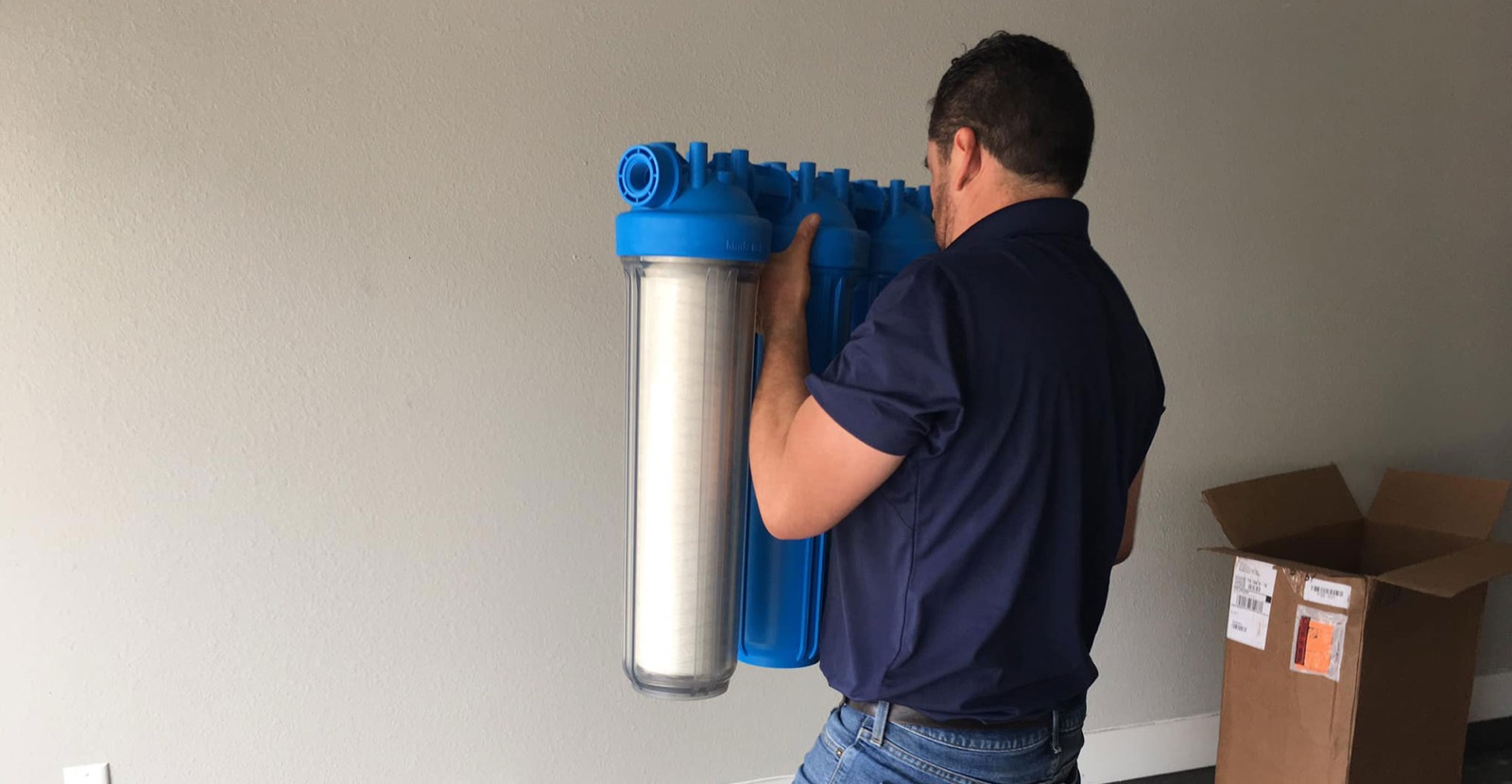
Water Softener Installation in Round Rock, TX
Round Rock's hard water — 15 to 20+ grains per gallon of dissolved minerals — is relentless on appliances, fixtures, water heaters, and even skin and hair. A properly sized, salt-based water softener is one of the most cost-effective upgrades a Round Rock homeowner can make. Alberto Plumbing installs, sizes, and services softeners across the city.
- 4.9★ Google · 186 reviews
- BBB A+ Accredited
- Licensed TX Master M-39647
- BuildZoom 95 Contractor score
- Family-Owned Local & independent
- 16+ yrs Experience
What Round Rock's Hard Water Is Costing You
The water coming out of your Round Rock tap is safe. The city's treatment plants meet or exceed every federal health standard. But "safe to drink" and "easy on your plumbing and appliances" are two different standards, and Round Rock's water supply — drawn from the Edwards Aquifer and processed through the Brushy Creek Regional Utility Authority — consistently delivers 15–20+ grains per gallon of dissolved calcium and magnesium.
That mineral load does not disappear in your home. It precipitates out wherever water is heated or evaporates. The most visible effects: white chalky buildup around faucet aerators and showerheads, a film on glass shower doors that commercial cleaners struggle to remove, spots on dishes and glassware out of the dishwasher, and dull or brittle hair after showering. These are annoying but cosmetic.
The less visible effects are more expensive. Inside your water heater tank, calcium carbonate settles on the heating element and the tank floor as scale. An eighth of an inch of scale on a heating element is roughly equivalent in insulation value to a significant air gap — the element must run longer and hotter to deliver the same water temperature, which raises your energy bill and shortens the element's life. Inside your dishwasher, the same scale coats the spray arms and heating element. In your washing machine, it reduces the cleaning effectiveness of detergent. Across the plumbing system, scale gradually narrows the bore of supply lines, reducing flow and pressure over years of buildup.
A properly sized water softener addresses all of these effects at the source, before the hard water reaches any fixture or appliance.
How Ion-Exchange Water Softening Works
A salt-based ion-exchange softener consists of two tanks: a resin tank packed with negatively charged resin beads, and a brine tank containing dissolved salt. As hard water flows through the resin tank, calcium and magnesium ions (both positively charged) are attracted to and bind with the resin beads, releasing sodium ions into the water in exchange. The water that exits the resin tank is chemically soft — the hardness minerals have been physically removed, not masked.
Periodically, the softener runs a regeneration cycle, flushing the resin bed with concentrated brine from the salt tank. This strips the captured calcium and magnesium off the resin and flushes them down the drain, recharging the beads so they can continue capturing hardness. Modern demand-initiated softeners run regeneration only when needed based on actual water usage, which minimizes salt and water consumption compared to older time-clock models.
Sizing for Round Rock's Specific Water Conditions
Sizing a water softener incorrectly is the most common installation mistake. An undersized unit runs regeneration too frequently — it does not have enough resin capacity to handle your household's daily demand at Round Rock's hardness levels, so it cycles constantly and wastes salt. An oversized unit goes too long between cycles and the resin may not fully regenerate, allowing hardness breakthrough.
Proper sizing requires knowing two things: your household's daily water demand and your inlet water hardness. We test your water on-site with a calibrated hardness test kit and calculate the grain capacity you actually need rather than guessing or defaulting to a single box-store unit size. For a typical three- or four-bedroom Round Rock home using 75–100 gallons per person per day at 18 gpg hardness, a 40,000- to 48,000-grain unit is generally appropriate. Households with more occupants or higher water use may need a 64,000-grain unit.
Newer Round Rock Subdivisions and Pre-Plumbed Softener Loops
Many of Round Rock's newer developments — Teravista, Siena, Paloma Lake, and several communities along the A.W. Grimes corridor — were built with a pre-plumbed softener loop: a bypass valve and stub-out in the utility room or garage designed for exactly this installation. If your home has one of these, installation is significantly faster (often under two hours) because we are simply connecting to an existing infrastructure point rather than cutting into the main line.
If you are unsure whether your home has a softener loop, look in the utility room or garage for a set of pipes with a bypass valve near where the main supply enters the conditioned space. We can also verify during a site visit.
Water Softener Service and Repair
We also service existing softeners in Round Rock. Common problems: salt bridges forming in the brine tank (a hard crust above the brine level that prevents proper dissolution), resin bead fouling from iron in the water supply, control valve failures, and motor issues on the drive head. If your current softener is not regenerating, is putting hard water through even after regeneration, or is running continuously, call (512) 429-6933 and we will diagnose it and quote the repair before starting any work.
Free in-home water test and estimate across all of Round Rock. Texas Master Plumber M-39647. 4.9 stars, 186 Google reviews.
Reviews for water softener installation
Water Softener Installation in Round Rock — FAQs
Round Rock water typically tests 15–20+ grains per gallon (gpg), sourced from the Edwards Aquifer and Brushy Creek Regional Utility Authority. The EPA classifies water above 7 gpg as "hard" — Round Rock is roughly two to three times that threshold. A properly sized water softener is one of the most impactful plumbing upgrades for any Round Rock home.
In a typical Round Rock home, installation runs 3–5 hours. If your home was built with a pre-plumbed softener loop (common in newer subdivisions like Teravista and Siena), installation can take under 2 hours. We test outlet hardness before we leave to confirm the system is working correctly.
A salt-based ion-exchange softener actually removes calcium and magnesium from the water. A salt-free conditioner (sometimes marketed as a "descaler") changes the form of the minerals so they are less likely to adhere to surfaces, but the minerals remain in the water. For Round Rock water at 15–20+ gpg, a salt-based softener provides far more effective scale protection. We recommend salt-based for most Central Texas homes.
A properly plumbed softener bypasses outdoor hose bibbs and irrigation lines — your lawn gets unsoftened water. Softened water with elevated sodium is not ideal for plants in large quantities, which is why bypass valves for outdoor use are a standard part of our installation.
Yes. We bring a calibrated hardness test kit and test your incoming water on-site before sizing or recommending any equipment. This takes about 10 minutes and is part of the free in-home estimate. Call (512) 429-6933 to schedule.
Save on your next service call
Related plumbing pages
Water Softener Installation in Round Rock, TX — call or text
Jose A. Vital, Owner & Master Plumber, and team — serving Pflugerville & Central Texas with honest, fast plumbing for 16+ years.
- 4.9★ Google · 186 reviews
- BBB A+ Accredited
- Licensed TX Master M-39647
- BuildZoom 95 Contractor score
- Family-Owned Local & independent
- 16+ yrs Experience